


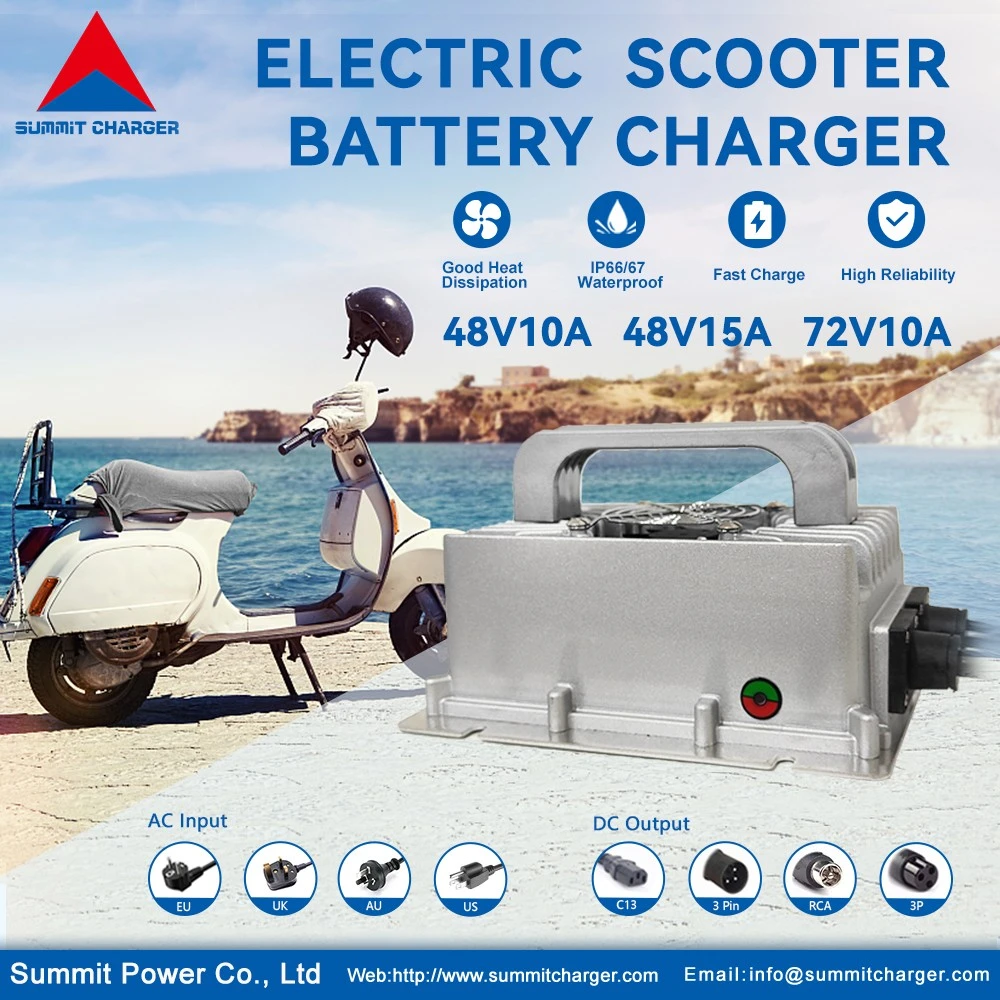
48V Electric Scooter Battery Charger
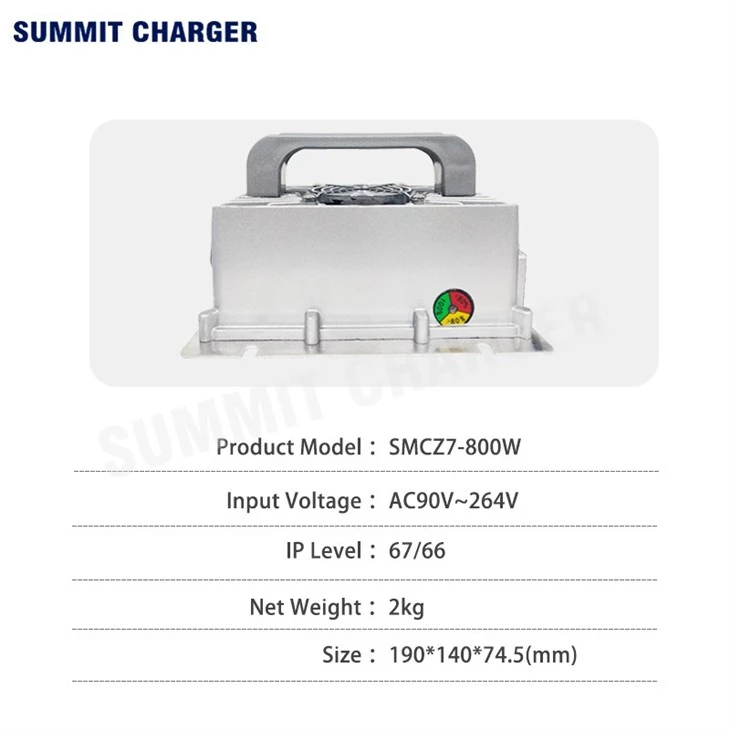
✱Input Voltage Range:AC90-264V,
✱Output Voltage:DC24V/36V/48V/60V/72V,
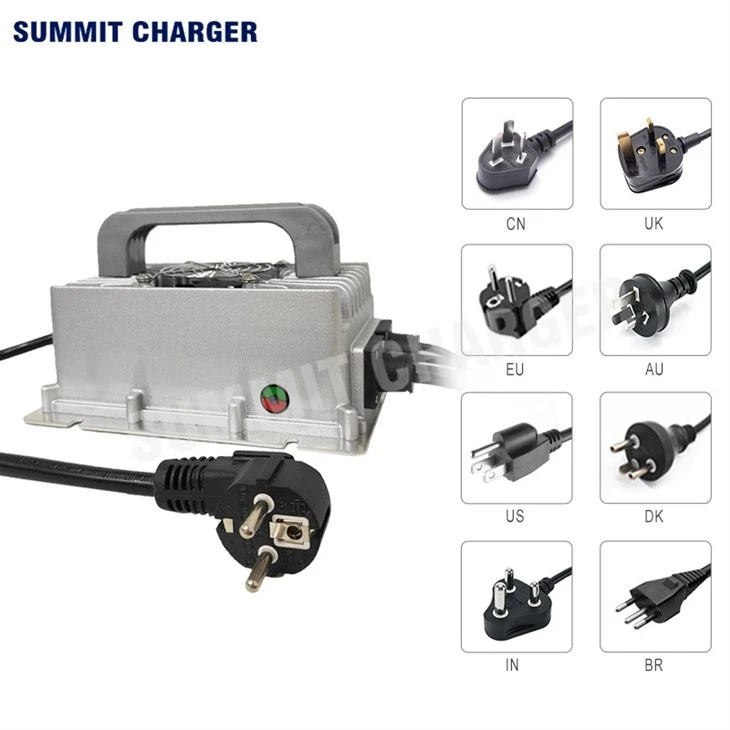
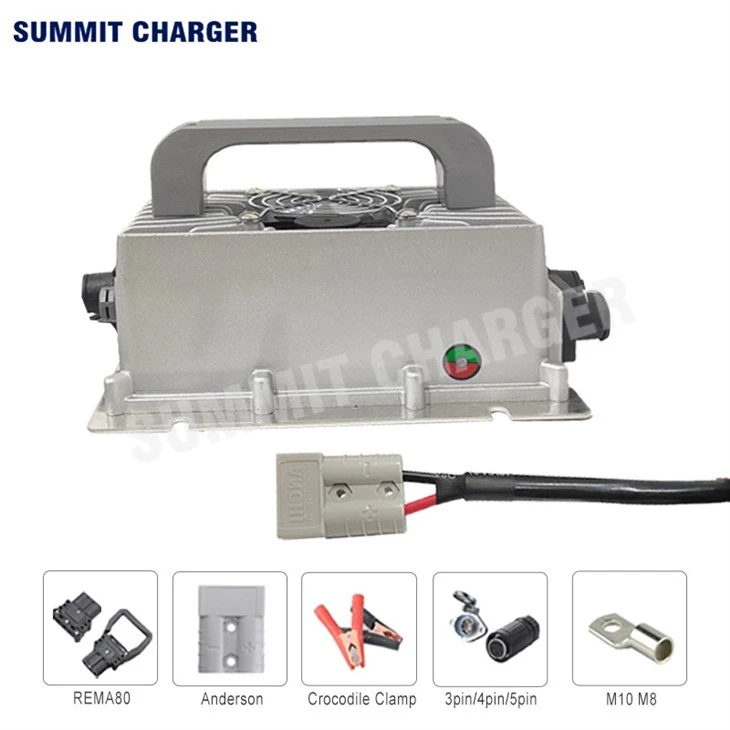
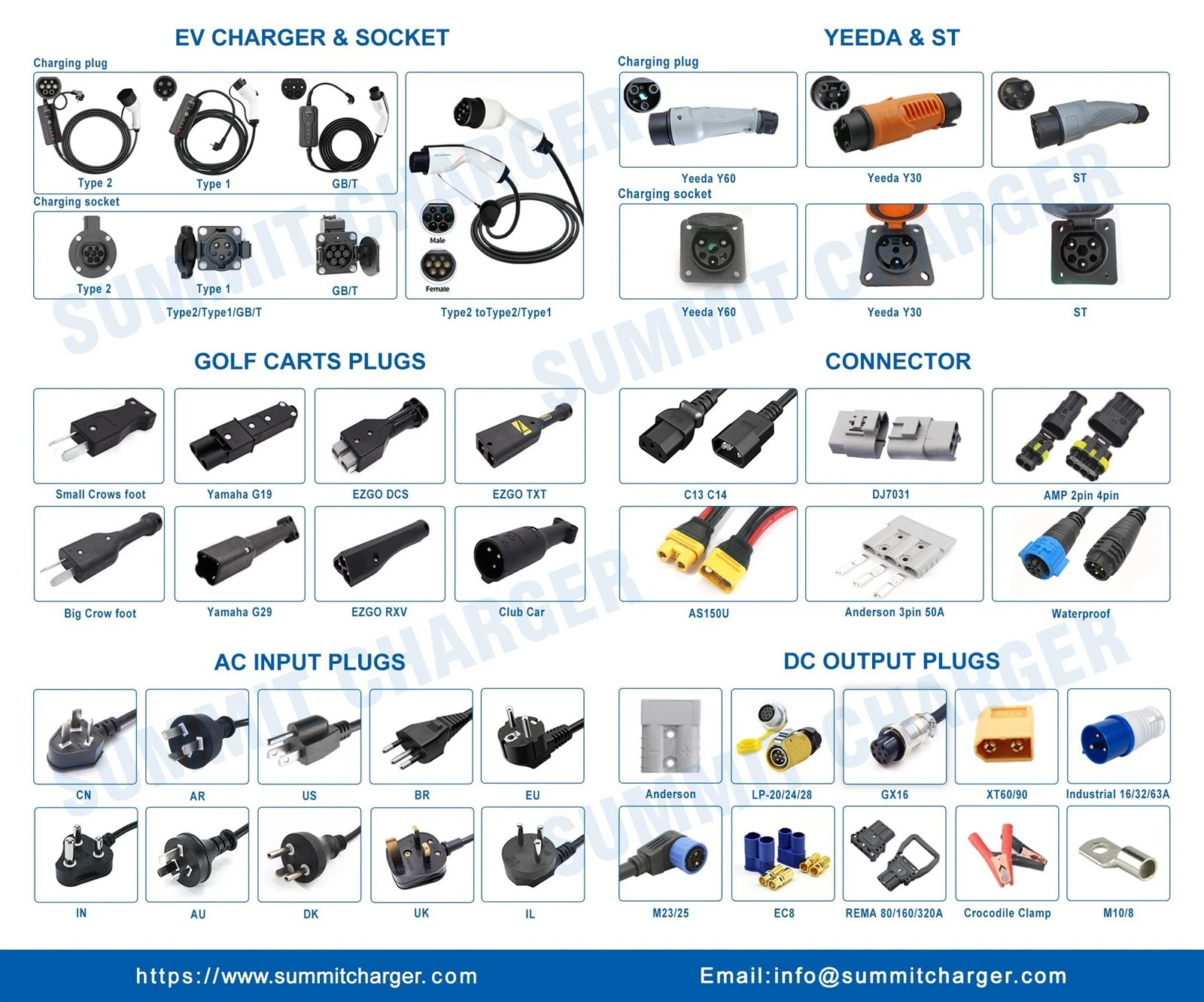
✱Input/Output Plug(optional),
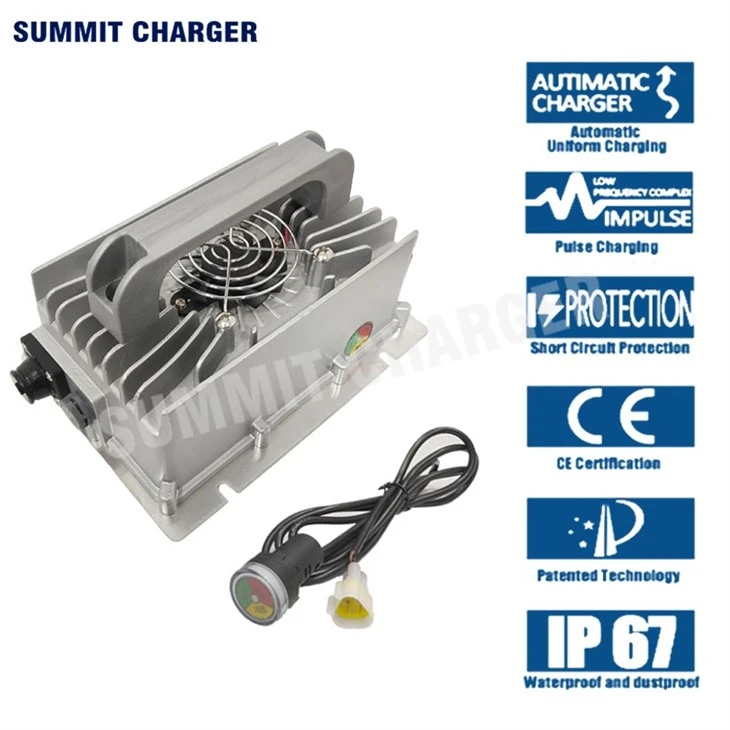
✱Charging Indicator(optional),
✱CAN BUS or not(optional),
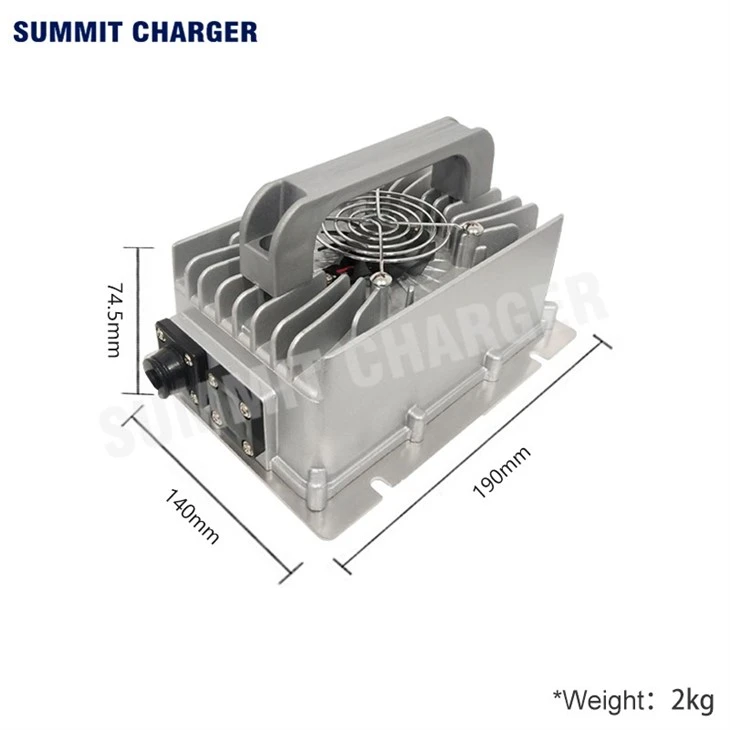
✱Size:190x140x74.5mm,
✱Net weight:2.0kg(4.4lb),
Send Inquiry
Product Details of48V Electric Scooter Battery Charger
Products Description
|
Item |
Parameters |
|
Ac Input Wide Voltage Range |
AC90V-264V |
|
AC Input Frequency Range |
40-70HZ |
|
With APFC Function,Power Factor |
≥0.98 |
|
Soft Switching Technology,Efficiency |
≥93% |
|
Protection Level |
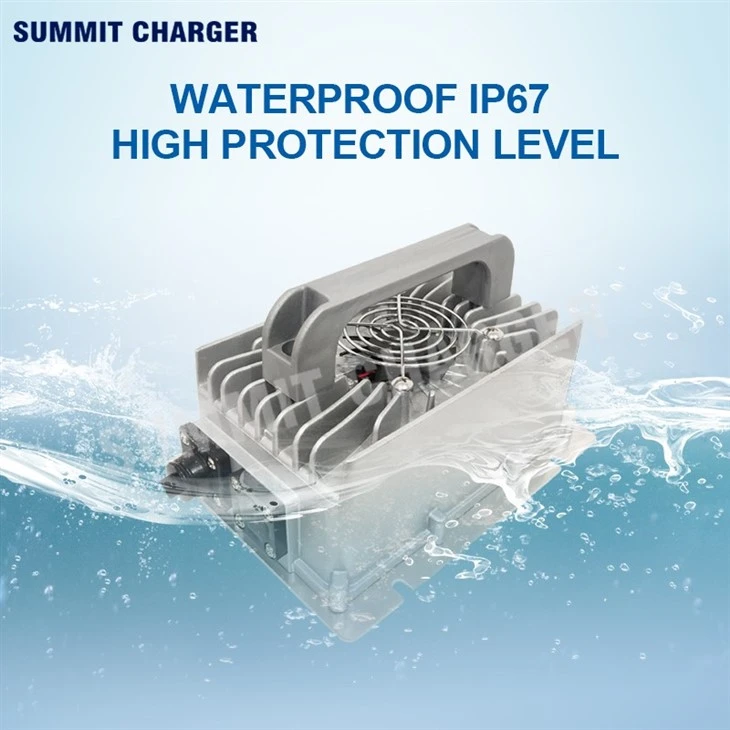
IP66/67 |
|
Operating Temperature |
-20℃~ +85℃ |
|
Storage Temperature |
-55℃~ +100℃ |
|
LED Light Indicator for Charging Process |
Standard |
|
Noise |
≤45dB |
|
Overall Size |
190x140x74.5(mm) |
|
Net Weight |
2.0kg |
|
Model Number |
Input Voltage Range |
Rated Output Voltage |
Max Output voltage |
Max Output Current |
|
SMCZ7-2420A/2420C |
AC90~264V |
24V |
30V |
20A |
|
SMCZ7-3615A |
AC90~264V |
36V |
45V |
15A |
|
SMCZ7-4815A/4812C |
AC90~264V |
48V |
60V |
15A/12A |
|
SMCZ7-6012A/6008C |
AC90~264V |
60V |
75V |
12A/8A |
|
SMCZ7-7210A/7206C |
AC90~264V |
72V |
90V |
10A/6A |
How To Properly Charge Your Electric Scooter Batteries?
Electric scooter batteries are one of the most expensive components of an electric scooter. To prolong battery life, make sure to keep them at around 75% charged.
An e-scooter's battery capacity is measured in watt hours (Wh). Higher Wh ratings translate into a longer range for a given motor size.
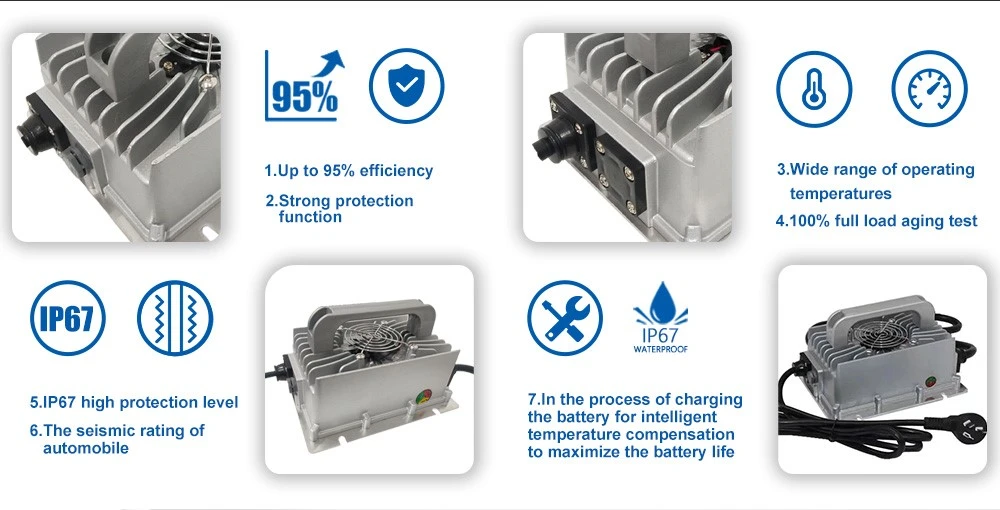
Features
The battery is your electric scooter's "fuel tank" storing the energy that powers your DC motor, lights, controller and other accessories. It's also what determines the range of your ride. Proper use and storage is essential to prolonging battery life, including properly charging it.
There are a few different types of 48V electric scooter battery chargers on the market. Be sure to choose the right one for your battery type and voltage requirements. Also, make sure that the charger is compatible with your devices.
For example, a charger with a 3-port inline connector will work with most Chinese-made electric scooters. On the other hand, a charger with an XT60 male or Anderson connector will work with many newer, high-performance eScooter brands.
If you're considering a lithium eScooter battery, be sure to buy a charger that is specifically designed for it. Summit Chargers have a special microprocessor that ensures the correct charging algorithm is used for your battery type. This helps to prevent overcharging, which can damage the battery. In addition, Summit Chargers have a built-in overload circuit breaker for protection.
Another option is to get a battery charger that will automatically detect the voltage of your battery. This will help to reduce the time it takes to charge your battery, which can save you a lot of time and money in the long run. Some models of these chargers will even have a feature that will monitor the temperature of your battery.
Most quality lithium batteries can go through 300 to 500 charging cycles before they start to diminish in capacity. You can further improve your battery's cycle life by storing it charged to 50% and topping it up periodically during very long periods of storage. You should also try to charge at a C-rate below 1, and avoid operating your eScooter in cold or hot temperatures. All of these steps can add up to a significantly longer battery life. Moreover, you should never leave your battery unattended or plugged in for long periods of time. This can cause the internal resistance of the battery to increase, leading to thermal runaway and fire.
Warranty
Most electric scooters on the market will feature some kind of lithium ion-based battery pack due to their excellent energy density and longevity. Cheap children's scooters will usually use cheaper lead-acid batteries. The battery pack in a scooter is made of many individual lithium-ion cells stacked together into a brick-like structure and monitored by an electronic circuit called a battery management system to ensure it's operating safely. The bigger the battery pack, the more watt hours it has and will allow a scooter to travel further. However, they add size and weight to the overall scooter as well as increase the cost as they are one of the most expensive components in a typical electric scooter.
Batteries are rated in units of energy capacity called watt hours (Wh). A Wh rating represents how much energy it stores for one hour. The higher the Wh rating, the more capacity of the battery. Most e-scooter battery packs are rated between 250 and 400 Wh. This is enough power to get most people from point A to B without running out of juice. Some scooters with more powerful motors can even exceed this range.
A good battery will be able to handle 300 to 500 charge/discharge cycles before diminishing in capacity. This is a lot of miles and means you don't have to be too careful about babying your electric scooter battery. However, it is a good idea to avoid storing a fully charged scooter and keeping a charger plugged in for long periods of time as this will degrade the battery.
If you need to recharge your battery pack more quickly, a quick rate battery charger is available that will recharge most packs in about 2-3 hours. It's recommended to use these with a lower C-rate than the battery charger's rated output to preserve and improve battery life.
Most e-scooter batteries are manufactured by a handful of well-known international companies. These batteries are then sold to the scooter manufacturers and put into the battery packs in their scooters. However, budget scooters often use generic Chinese-manufactured batteries and these can vary in quality. If you're purchasing a budget electric scooter, make sure it's built by a reputable manufacturer with established brand names and branded battery cells for a better guarantee of quality.
Installation
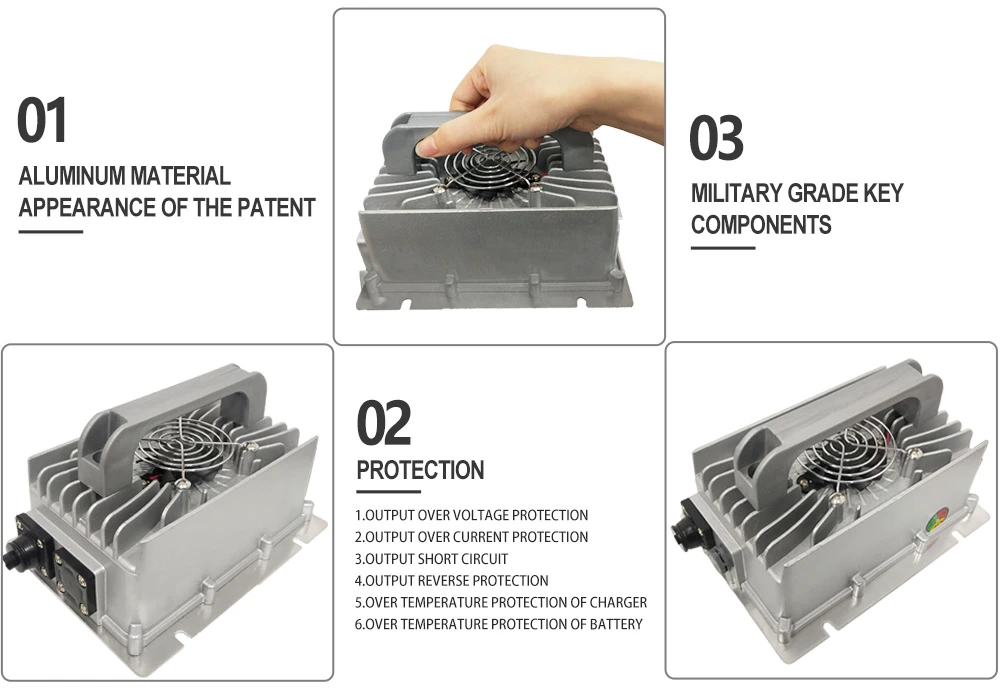
Ensure that the battery charger is compatible with the voltage and current requirements of your electric scooter battery. Incompatible chargers can damage your batteries and even cause them to catch fire! Always charge your electric scooter battery in a well-ventilated area, wear gloves, and use a power supply that has the correct polarity to avoid any mishandling.
Using an automotive or motorcycle battery charger to recharge your 48V scooter battery is not recommended and may cause permanent damage to your batteries and equipment. These type of battery chargers are designed for lead-acid wet cell batteries, and are unable to properly charge the Lithium Ion technology used on most electric scooter batteries.
The simplest way to connect your new electric scooter battery charger is to plug it into the power outlet on your wall, then attach the positive (red) terminal of the battery to the charger's negative (black) terminal. Connecting the charger in reverse can damage the battery.
Once the charging indicator light on the battery charger turns solid green, disconnect it from the power outlet and connect the other end of the power cable to your plugged-in scooter. Be sure to use the correct polarity, and make sure that the scooter is turned off while the battery is charging. If your scooter has a built-in voltmeter or battery display, it will let you know when the battery is fully charged.
When you're ready to ride again, reconnect the battery and turn on the scooter. You'll be impressed with the increased range and speed! If you're planning to go on a longer trip, we recommend adding an external battery pack to your electric scooter.
An external battery pack works simultaneously with the internal platform battery, thereby noticeably increasing the range of your ride. They are relatively inexpensive, and can be easily installed by following the instructions provided with each product. Be sure to wear gloves when handling the battery and keep it away from flammable materials during installation and charging.
FAQ
The battery is your e-scooter's "fuel tank" and it stores the energy that is used by the DC motor, lights and controls to drive your scooter. The electric battery is rated in AH or Wh (watt hours) - a unit of measure for the amount of energy stored.
E-scooter batteries are a combination of many individual lithium ion battery cells. Each cell has an electric potential of 3.6 volts and a capacity of about 2.6 amp-hours or 9.4 watt hours. These cells are assembled together into brick-like battery packs that contain hundreds or thousands of watt hours of capacity. These battery packs are monitored and regulated by the onboard battery management system of your electric scooter.
The AH rating of an electric battery is directly related to its voltage - higher voltage systems allow the BLDC hub motor on your e-scooter to go faster. However, it's also important to understand that when you are riding your e-scooter and discharging its battery the voltage will decrease - a process called "voltage sag." As the battery discharges it will drop to what is known as its cut off voltage. This is a safety feature that prevents the battery from discharging too low and damaging the battery or motor.
When you plug your battery charger into the e-scooter and the power outlet, the charger should have one red light illuminated and one green light illuminated. The red light blinking indicates that the battery is charging. Once the charging time is complete the indicator light will switch to solid green and the battery is now ready for use.
If you consistently charge your battery to 100%, it can significantly reduce the number of cycle that it is capable of taking over its lifetime. Using a specialist battery charger that offers a cut off point below 100% can significantly increase the life cycle of your battery pack.
Be aware that electric scooter chargers generate heat during charging and need to be left uncovered and unobstructed so they can properly air cool. Placing the charger on a hot blanket, carpet or fireplace can cause permanent damage to your battery and charger.
Charger Wirings
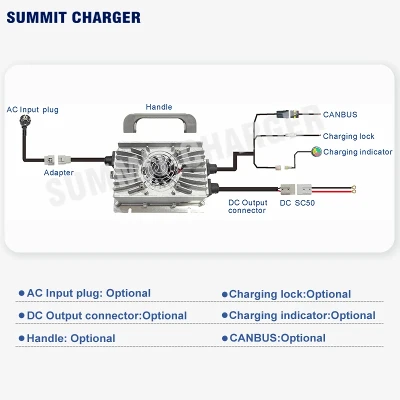
Optional Wirings
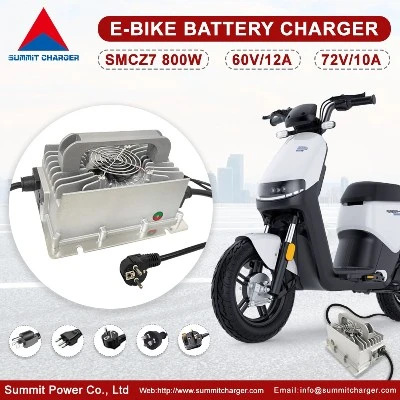
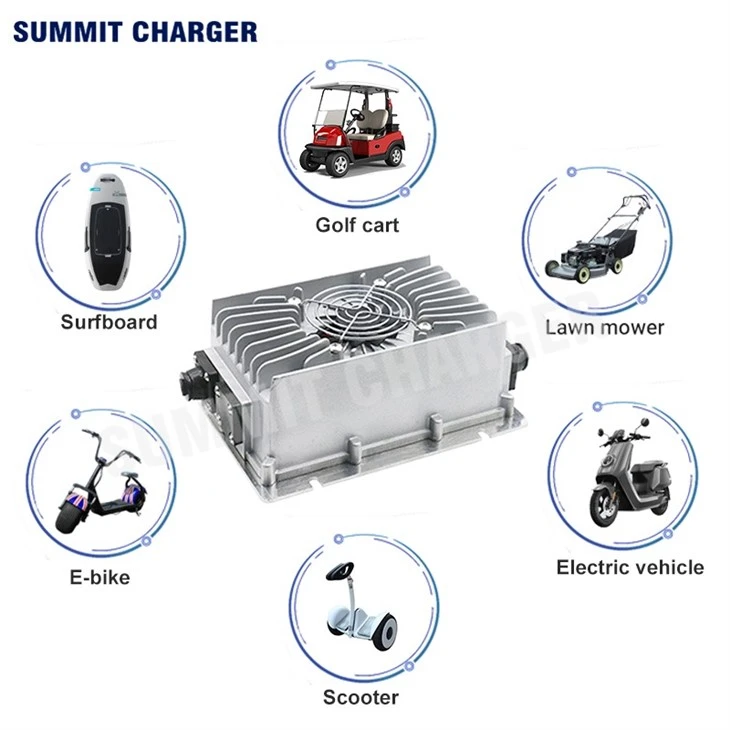
Application
Optional Plugs & Connectors
Summit Charger Series

Hot Tags: 48v electric scooter battery charger, China, suppliers, manufacturers, factory, wholesale, in stock
Previous
60V Ebike ChargerSend Inquiry
