

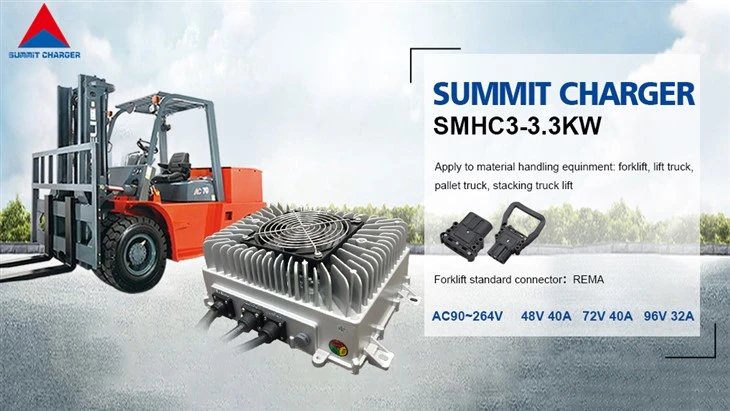
Summit Forklift Charger
✱Input Voltage Range:AC90-264V,
✱Output Voltage:DC 12V/24V/36V/48V/60V/72V/96V,
✱Input/Output Plug(optional),
✱Charging Indicator(optional),
✱CAN BUS or not(optional),
✱Size:282x146x82cm,
✱Net weight:2.7kg(5.9lb),
Send Inquiry
Product Details ofSummit Forklift Charger
How to Choose a Perfect Forklift Battery Charger
When it comes to selecting the perfect forklift battery charger, there are many factors to consider. These include battery type, voltage, charging time, and temperature control.
Choosing the right forklift battery charger will ensure seamless productivity in your business operations. It is important to choose one that is compatible with your forklifts and meets your specific needs.
Battery Type
Choosing the right forklift battery charger can boost productivity and reduce downtime. It’s important to consider factors such as battery type, voltage, charging time, and temperature control before making a purchase. A high-quality charger may be more expensive upfront, but it will save money in the long run by increasing uptime and reducing maintenance costs.
First, consider the size of your forklift’s batteries. The charger should fit them snugly and securely, but it should also have some wiggle room. This allows more power to flow from the charger to the batteries, which results in a faster charge and longer battery life.
Next, consider your business’s operating schedule and how often you use forklifts. Ideally, you should aim to recharge the batteries before they drop below 20%. This will help prevent the battery from getting too depleted, which can affect its performance in the future. However, it’s important to remember that recharging a battery too early can have negative effects on its performance as well.
If you have a multi-shift operation, you might need to recharge batteries more frequently. In this case, a fast forklift battery charger can be a great option. These chargers can charge a battery in as little as an hour, which is perfect for short breaks or shift changes. However, it’s important to note that fast charging is hard on batteries and can lead to a shorter battery life.
A high-quality forklift charger will have gauges that display the status of each battery, which can be very helpful in preventing downtime caused by out-of-charge forklifts. Some chargers will also feature a battery-conditioning function that can improve the performance of your forklift’s batteries by removing corrosion and balancing the cells.
When choosing a forklift battery charger, it’s best to buy one from the same manufacturer as the batteries. This will protect the batteries’ warranty and make technical support easier if needed. However, if you don’t have the option to buy chargers from the same manufacturer as your forklifts, choose a model that can fit multiple sizes of batteries. This way, you can keep your forklifts running smoothly and efficiently all day long.
Voltage
Depending on the forklift’s type and voltage, there are three main types of chargers. Conventional charging is the most common and plugs into a standard electrical outlet. It takes about 8 hours for a full charge and another 8 hours for it to cool. This type of battery charging works best for single-shift operations.
Lithium-ion batteries are a more recent option that offer faster charging times and longer life spans than traditional lead-acid batteries. They’re also less expensive to maintain and operate. However, they’re generally more costly upfront than conventional batteries. To choose the right charger for your business, consider how often you’ll need your forklifts charged and your operational schedule.
When choosing a forklift battery charger, make sure it can accommodate the size and voltage of your forklift’s batteries. Check the charger’s data plate to find out its maximum input and output voltage. Also, look for a charger with an easy-to-read display that indicates the battery’s status and charge cycle. A good charger will also regulate battery temperature to prevent overheating and extend its life span.
Battery chargers should never be left unattended while in use, and should be kept in a well-ventilated area. They should also be regularly inspected for signs of damage or wear. In addition, they should have a safety monitor that can detect and alert personnel to any excess levels of hydrogen gas in the battery room.
Finally, it’s important to ensure that the charger’s cables are large enough to safely engage with the positive and negative posts on a forklift battery. Smaller charger cables may create an electrical circuit and cause the battery to overheat. Moreover, the charger’s terminals and cells should be kept away from metal jewelry and other metallic items, as they can complete an electric circuit and cause injuries or fire. Battery chargers should also be equipped with a cooling fan to prevent overheating. If you notice the charger getting hot, it is a sign that it is working too hard and should be shut down until it cools. It’s also important to keep in mind that a forklift battery charger should always be switched off when the forklift is in service.
Charging Time
Choosing the right charger for your forklift battery will ensure its maximum performance and life span. It is important to understand the different types of charging options and how they fit into your warehouse operations. Conventional charging, fast charging and opportunity charging are all options to consider. Each option has a specific use case and benefit.
Conventional charging is the most common forklift battery charge method. It requires that batteries be left plugged in overnight, taking about 8-10 hours to fully charge and cool down. This method is ideal for single-shift operations. It is best for preventing overcharging, which can shorten the lifespan of lead acid batteries.
When selecting a conventional charger, make sure the output voltage and Ah capacity is closely matched to your forklift battery. Going too large in the charger sizing risks overcharging the battery and damaging its internal components, while going too small may not stir the electrolyte sufficiently and work the charger harder than needed.
Forklift battery chargers that are sized correctly for the battery will maintain the batteries at about a 75% charge level at all times. This type of charging prevents overcharging and keeps the batteries healthy by balancing the electrolyte levels. It is recommended to charge a forklift battery at the first sign of a low state of charge, ideally when it is below 80%.
Lithium-ion batteries can be charged more often than traditional lead-acid forklift batteries, but should only be plugged in for a short amount of time. It is recommended to keep a lithium-ion battery plugged in at a steady rate of about 20% each day, which will help it retain its lifespan.
Another way to keep a forklift battery fully charged is to allow it to charge during breaks or shift changes. This is known as opportunity charging and can increase productivity while reducing battery maintenance costs. Conventional and fast charging methods can also be used to achieve the same results, but should only be done if the forklift will be used on a regular basis. Otherwise, opportunity charging will not be effective.
Temperature Control
When choosing the best forklift battery charger, keep in mind that it should be capable of working well in your facility’s climate. If you use a charger that’s not designed to work well in hot temperatures, it can cause the batteries to overheat during charging. This can reduce their lifespan and decrease their capacity, which could impact your operations.
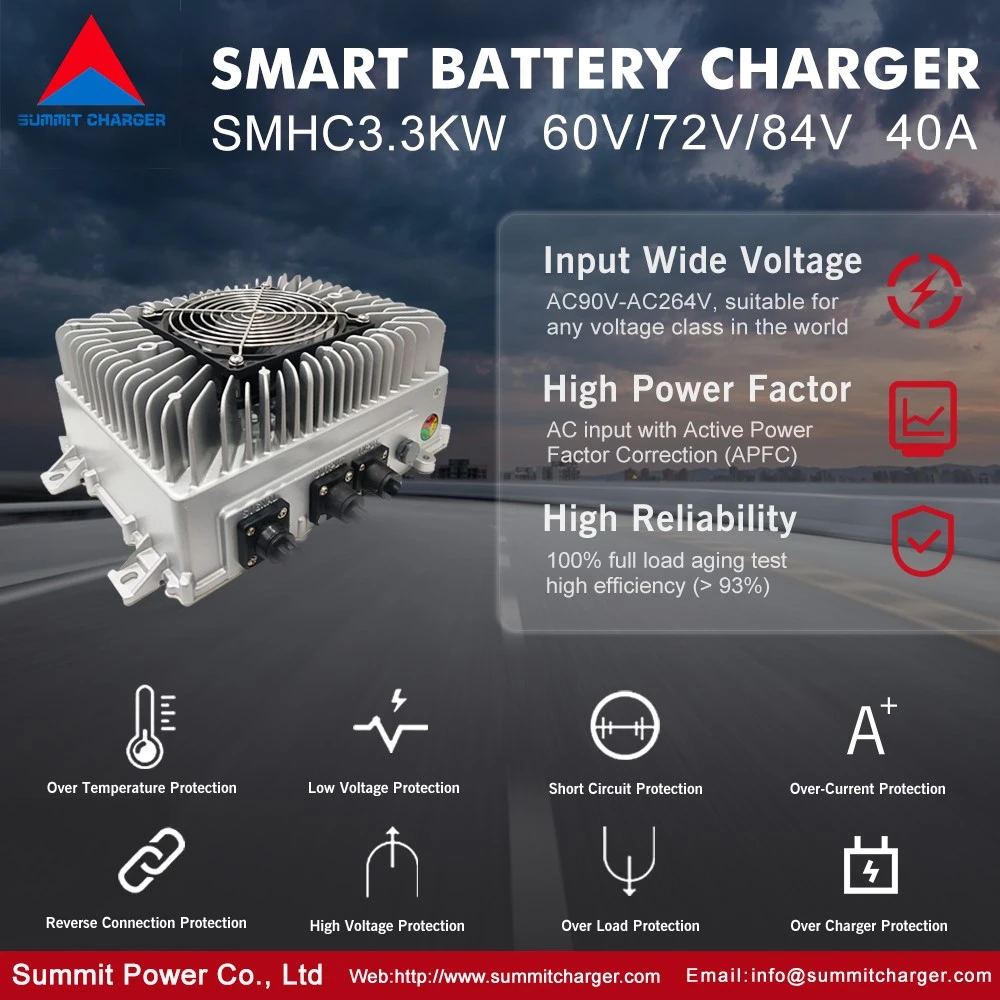
To avoid overheating, choose a forklift battery charger with a fan to cool the unit. This will help it last longer and allow it to offer more charging cycles than a non-fan cooled charger. It’s also a good idea to choose one that has large charging cables, as these will typically lead to a better charge for the battery than smaller ones.
Another important consideration when selecting the right forklift battery charger is the voltage it supports. Some are multi-voltage and can accept multiple battery voltages, while others are single-voltage chargers that only work with a specific range of forklift batteries. To find out whether a battery charger can accept your facility’s input voltage, check its data plate or contact the manufacturer.
If you use a lithium battery, your forklift will require far less maintenance than a traditional lead-acid power unit. Lead-acid batteries must be watered, cleaned after acid spills, and equalized (applying a special charging mode to balance the cells’ charge) on a regular basis, adding to labor and external service costs.
For optimal results, you should start the charging process when a battery’s charge drops to about 20% of its capacity. This will provide the ideal balance between battery life, performance, and downtime. If you use a fast charger, the batteries will remain in the forklift and only take 10 – 30 minutes to charge to 80%, although they’ll need to be equalized once a week. It’s a great option for heavy-use, multi-shift operations.
Hot Tags: summit forklift charger, China, suppliers, manufacturers, factory, wholesale, in stock
Previous
48v 40a chargerSend Inquiry
